Crystal Clear: Scuba Gear for Divers with Glasses
Mistaking a moray eel for a piece of swaying kelp is a mistake you generally only make once. For scuba divers with less-than-perfect vision, the underwater world can sometimes look like an impressionist painting – beautiful, but suspiciously blurry. When you are paying good money to explore vibrant coral reefs, blurring the lines between a majestic sea turtle and a large, vaguely turtle-shaped rock is simply unacceptable.
Fortunately, being “blind as a bat” on land does not mean you have to be one underwater. Whether you are dealing with myopia (nearsightedness), hyperopia (farsightedness), or the dreaded astigmatism, the diving industry has engineered several crystal-clear solutions for you.
Here is how to get your 20/20 vision back beneath the waves, complete with specific gear recommendations.
Why You Can’t Just Stuff Your Specs in a Mask
Let’s get the obvious question out of the way: no, you cannot wear your eyeglasses inside a standard scuba mask. The arms of your glasses will break the watertight silicone seal against your temples. If you try it, your mask will flood with seawater faster than you can say, “Where is my regulator?” To see clearly, the optical correction must either sit directly on your eyeballs, be swapped into the mask’s frame, or be custom-ground into the mask glass itself.
Solution 1: Soft Contact Lenses
For many divers, the easiest and most cost-effective solution is simply wearing soft contact lenses under a standard dive mask. If you already wear disposable contacts, you are essentially good to go. Soft contacts allow you to buy any off-the-shelf mask that perfectly fits your face shape, and they naturally correct complex issues like astigmatism that cheap pre-made masks cannot.
The Catch: If your mask floods or gets knocked off, you run the risk of washing your contacts right into the ocean. (And trust us, a clownfish has no use for your -3.50 prescription.) If you go this route, daily disposables are highly recommended so you don’t lose an expensive long-term lens.
Solution 2: Drop-In Corrective Lenses (Off-The-Shelf)
If you hate poking yourself in the eye with contacts, pre-made corrective lenses are your next best friend. Many scuba manufacturers design specific dual-lens masks with interchangeable glass. You simply pop out the standard tempered glass and pop in a prefabricated corrective lens.
These lenses usually come in 0.5 diopter increments, typically ranging from -8.0 to +4.5. They are highly affordable and easy to source.
Top Masks
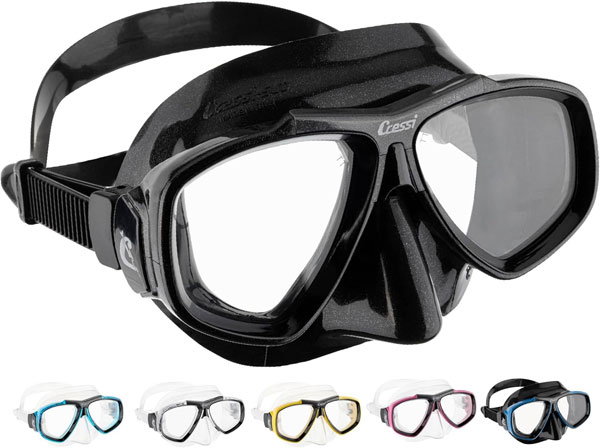
Cressi Focus: A legendary, tried-and-true dual-lens mask from Cressi. It has been around for years specifically because it is incredibly comfortable and easy to outfit with negative or positive prescription drop-in lenses.
TUSA Ceos (M-212): TUSA makes some of the best optical glass in the business. The Ceos is a low-profile mask that accommodates top-tier TUSA drop-in lenses, which are ground from solid glass rather than glued together.
ScubaPro Zoom: Another phenomenal dual-lens option engineered specifically for fast lens swapping. You can literally change the lenses in under a minute without specialized tools.
Solution 3: Custom Prescription Masks
Pre-made drop-in lenses are strictly spherical. If you have severe astigmatism (requiring cylinder and axis corrections) or a highly complex prescription, off-the-shelf lenses won’t cut it. Enter the custom prescription mask.
In this scenario, specialized optical labs take your exact optometrist prescription and custom-grind the glass. They then permanently bond these lenses to the inside of the mask or replace the mask glass entirely. This is the Rolls-Royce of seeing underwater; it is pricier, but the resulting panoramic clarity is absolutely flawless.
Top Equipment Models / Services
SeaVision: Highly recommended by custom optical retailers like SportRx, SeaVision custom-builds masks to your exact optical specifications in their lab. They offer single-vision, bifocals, and even color-tinted lenses to enhance underwater contrast.
SportRx: Rather than a single model, this is an optical service that can take premium dual-lens masks and custom-fit them with your exact prescription, offering a “See Better Guarantee”.
Solution 4: Stick-On Bifocals
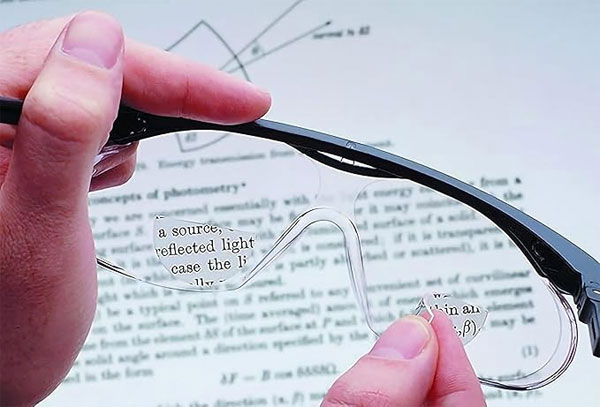
If your distance vision is perfect but you suddenly find yourself unable to read the tiny digits on your dive computer, you are likely dealing with presbyopia. Instead of buying a fully customized mask, you can buy “cheaters” – small, half-moon magnifying lenses made of flexible silicone. You just wet them and stick them to the bottom interior of your standard dive mask. They act exactly like reading glasses!
5 Great Tips for Glass-Wearing Divers
- Keep Your Eyes Closed When Clearing: If you choose to dive with soft contact lenses, make it a religious habit to close your eyes whenever you clear a flooded mask. Opening your eyes underwater is a guaranteed way to lose your lenses to the tide.
- Bring a “Boat Spare”: It is a classic tragedy: you climb back onto the dive boat, proudly take off your prescription mask, and are instantly rendered blind again. Always keep a cheap, sturdy pair of backup glasses in a hard case in your dry bag so you can actually see what you’re eating for lunch on the surface.
- Beware the Toothpaste Trick: Divers are taught to scrub the inside of a new mask with abrasive toothpaste to remove the factory silicone film and prevent fogging. However, if you bought a high-end custom prescription mask, abrasive paste can permanently scratch your expensive optical lenses. Always check with the manufacturer; you may need to stick to specialized, gentle defogger liquids instead.
- Choose a Dual-Lens Mask: Single-window (frameless) masks are fantastic for an unobstructed field of view, but they cannot accommodate drop-in prescription lenses. If you plan on upgrading your mask with corrective glass later, make sure you buy a framed, dual-lens model right from the start.
- Guard Your Mask with Your Life: A standard mask is easily replaced if a clumsy diver drops a weight belt on it. A custom prescription mask is an expensive piece of medical equipment. Never leave it sitting exposed on the dive bench; the moment your dive is over, rinse it in fresh water and put it securely inside a hard plastic protective case.