Collecting Trash while SCUBA Diving: Because we Love the Sea
Yes, please do. Try your best to collect some trash when you SCUBA. Every time we roll backward off a boat or stride out past the surf zone, we enter a fragile, mesmerizing world. We glide alongside sea turtles, marvel at vibrant coral, and find peace in the rhythmic sound of our breathing. But increasingly, we encounter the ugly footprint of human activity: plastic bags drifting like jellyfish, fishing lines tangled around sponges, and beverage cans littering the sand.
As divers, we serve as ambassadors of the underwater realm. We see the damage firsthand, which means we possess the unique power to fix it. Integrating trash collection into your regular dives transforms you from a spectator into an active protector of the ocean. It feels rewarding, but it requires forethought. Here is how you can effectively and safely incorporate marine cleanup into your next dive.
Start Small: No Special Tools Required
You might think you need an arsenal of specialized gear or an advanced certification to make a difference. You don’t. You can make an immediate impact with absolutely zero extra equipment.
If you spot a single plastic grocery bag tumbling across the reef, snatch it up. Squeeze the water out, roll it into a tight ball, and stuff it right into your BCD pocket. That simple, seemingly insignificant action might have just saved a sea turtle from a lethal intestinal blockage.
Make it a personal goal to retrieve just one piece of synthetic debris on every dive. If every certified diver removed one plastic wrapper or a stray bottle cap every time they submerged, we would extract millions of pieces of trash from the ocean each year. Your BCD pockets are perfect receptacles for these small items. By normalizing this habit, you set a powerful example for your dive buddies and prove that ocean conservation is accessible to everyone.
Gearing Up: Helpful Tools for Underwater Cleanups
Once you catch the cleanup bug, you might want to upgrade your collecting capacity. Fortunately, assembling a basic underwater cleanup kit costs very little and easily integrates into your standard dive rig.
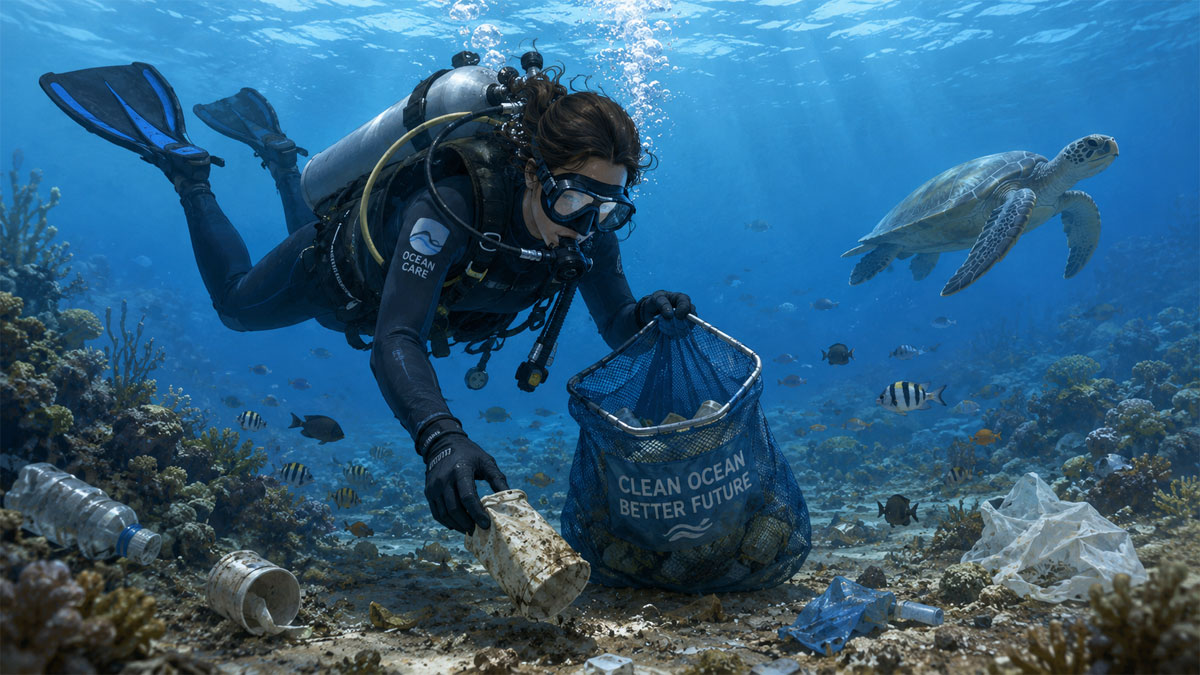
First, invest in a good mesh bag. Unlike solid bags, mesh allows water to flow freely, minimizing drag and preventing you from fighting your own gear in a strong current. Clip it to a D-ring on your BCD so it sits flush against your body when not actively in use.
Next, carry a pair of cutting tools.
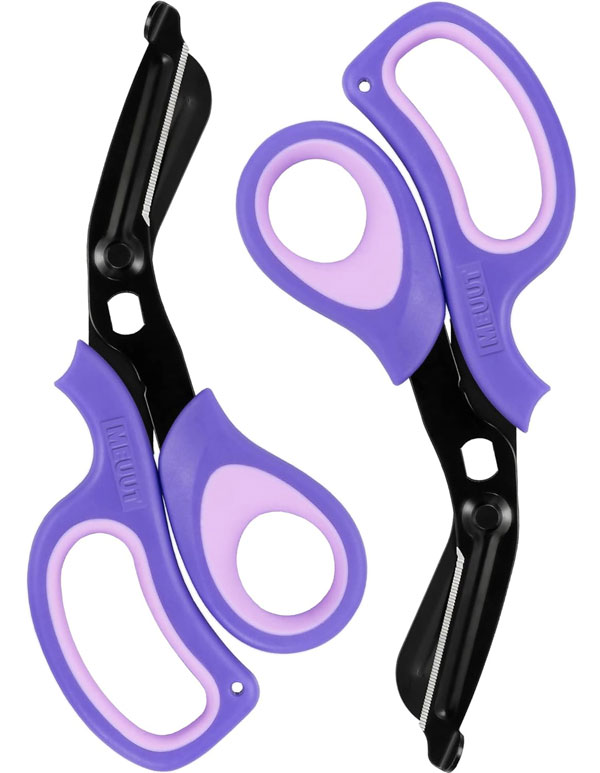
EMT trauma shears perform much better underwater than traditional dive knives when cutting thick monofilament fishing lines. They slice cleanly without the risk of accidentally stabbing your hand or the adjacent coral. A specialized line cutter featuring an enclosed razor blade is another fantastic, ultra-safe option.
Finally, wear a sturdy pair of neoprene diving gloves – assuming local marine park regulations permit them. Gloves protect your hands from sharp rusted edges, fiberglass splinters, and potential bacterial infections found on submerged debris.
Safety First: Protect Yourself While Protecting the Reef
While rescuing the reef from trash is a noble pursuit, your personal safety and fundamental diving skills must always come first. Task loading—the stress of adding new responsibilities to your dive – can quickly sneak up on you.
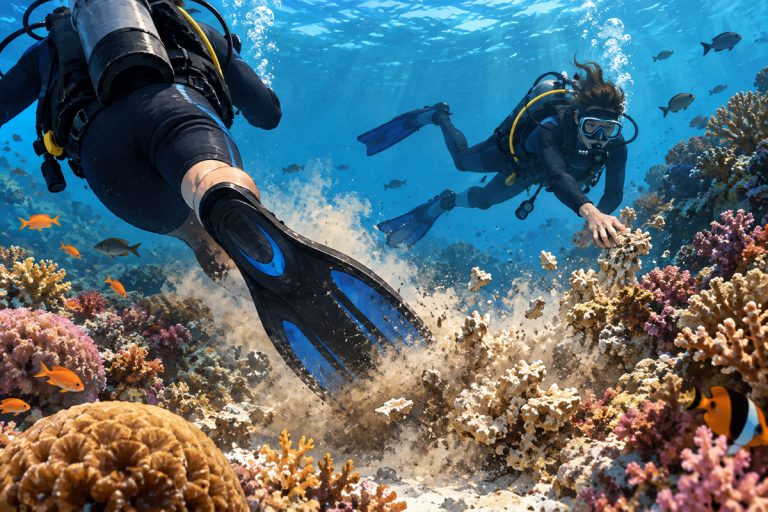
Maintain flawless buoyancy control at all times. When you focus intently on dislodging a stubborn plastic cup, you might inadvertently drop your knees onto a living coral head or stir up a massive silt cloud. Establish neutral buoyancy before you reach for any debris. If you cannot extract the trash without damaging the surrounding reef, leave it behind.
Keep a close eye on your air consumption and depth gauge. Wrestling with a tangled fishing net burns energy and depletes your tank pressure faster than a relaxed dive. Communicate clearly with your buddy. Before you stop to retrieve an item, signal them so they know exactly what you are doing. A good team works together, with one diver collecting debris while the other monitors their surroundings.
Look Before You Grab: What NOT to Touch
Not all trash needs saving. The ocean possesses an incredible ability to reclaim man-made objects, and sometimes removing debris causes more harm than good. You must distinguish between hazardous litter and new marine habitats.
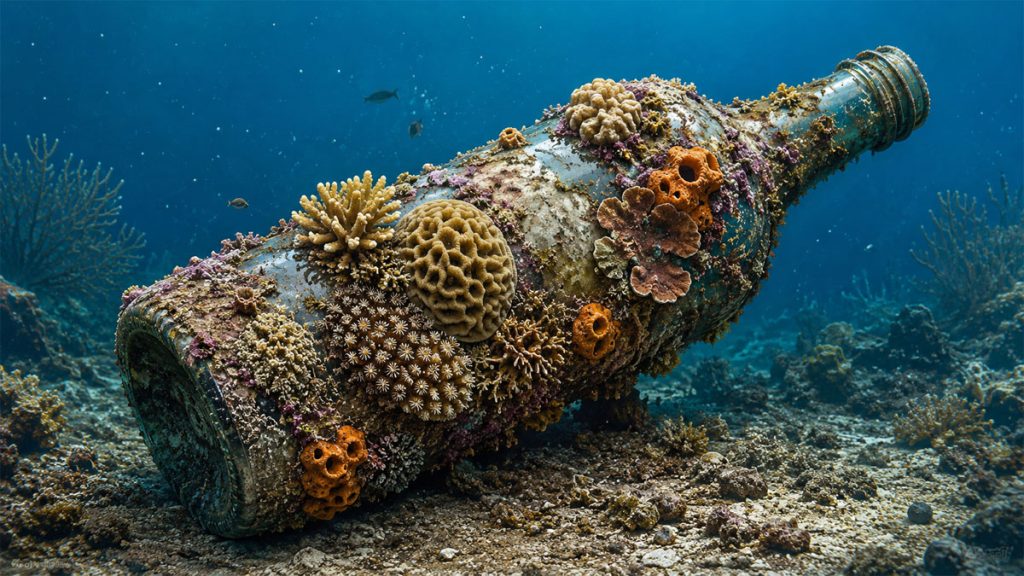
Never disturb trash heavily encrusted with marine life. If a glass bottle is covered in hard corals or sponges, the ocean has already claimed it. Leave it alone. Similarly, always peer inside bottles, cans, and pipes before picking them up. These hollow structures frequently serve as protective homes for octopuses, blennies, and crustaceans. If someone lives inside, put the “house” gently back down on the sand.
Avoid touching hazardous materials. If you stumble upon unmarked chemical drums, leaking batteries, or anything resembling unexploded ordnance, maintain a safe distance. Note the location, surface safely, and report the coordinates to local authorities.
Finally, know your lifting limits. Do not attempt to haul up heavy items like waterlogged tires using only your BCD for lift. Doing so can cause an uncontrolled ascent, putting you at severe risk of decompression sickness. Heavy lifting requires specialized training and proper deployment of a lift bag.
Every piece of plastic you remove from the sea matters. Dive safely, pick up what you can, and help keep our beautiful oceans healthy for generations to come.