
Maldives Diving Tragedy: Six Dead After Deep Cave Dive Goes Wrong
Maldives Cave Diving Tragedy Highlights the Real Risks of Deep Overhead Environment Dives
A Tragic Diving Accident in the Maldives
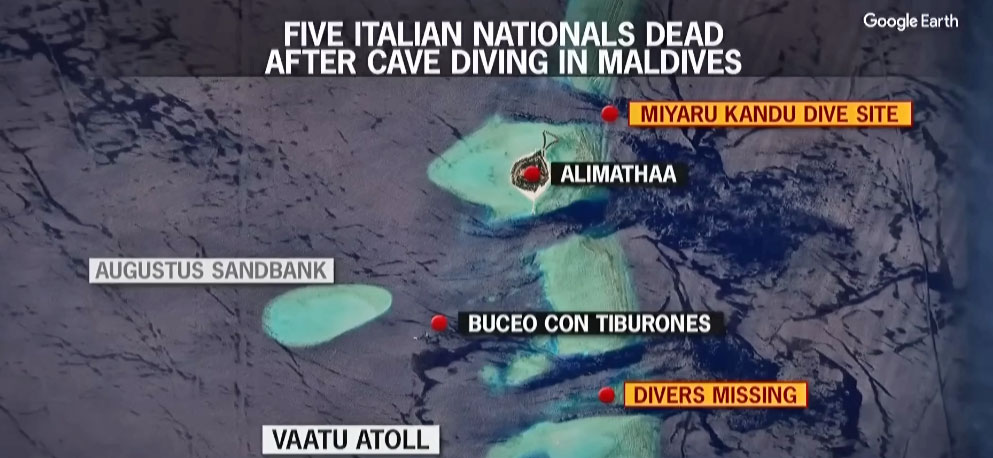
The diving community is still processing the tragic accident that took place in the Maldives this week, where five Italian divers lost their lives during a deep cave dive in Vaavu Atoll. The group included experienced divers, marine researchers, and diving professionals, among them University of Genoa ecology professor Monica Montefalcone, her daughter Giorgia Sommacal, research fellow Muriel Oddenino, marine biology graduate Federico Gualtieri, and diving instructor Gianluca Benedetti.
According to reports from Italian and Maldivian authorities, the divers entered an underwater cave system at a depth of around 50 meters (164 feet). When they failed to resurface, the crew aboard their dive vessel reported them missing. Recovery teams later confirmed that at least one body had been found inside the cave system, while the others were believed to remain deeper within it.
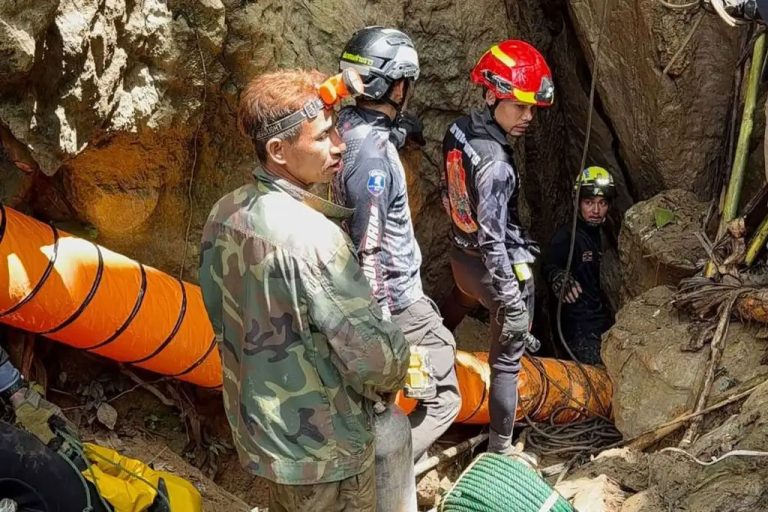
The situation became even more serious when a Maldivian military diver involved in the recovery operation later died from decompression sickness. Search operations were temporarily suspended because of the extreme risks involved.
For many recreational divers, the accident may sound shocking because the Maldives is usually associated with warm water, coral reefs, drift dives, and relatively accessible dive tourism. But this incident was not a standard recreational dive. It involved a combination of technical cave diving, deep diving, overhead environments, rough sea conditions, and potentially hazardous breathing gas exposure. Even for highly trained divers, that combination can become unforgiving very quickly.
Why Cave Diving Is Considered One of the Most Dangerous Forms of Diving
Cave diving carries a completely different risk profile from open-water scuba diving. In a normal recreational dive, a diver can usually make a direct ascent to the surface in an emergency. Inside a cave, that option disappears.
Once divers enter an overhead environment, every meter deeper into the system increases complexity. Visibility can deteriorate instantly from disturbed silt. Navigation becomes difficult. Equipment failures become harder to manage. Stress levels rise faster because there is no immediate exit route.
According to early reports, the cave system in Vaavu Atoll included several chambers connected by narrow passages. This detail is important because restrictions inside caves are among the most dangerous features divers can encounter. Tight passages can complicate movement, increase gas consumption, and create entanglement or panic risks, especially if visibility drops.
Unlike reef dives, cave dives also demand extremely disciplined gas management. Technical divers often follow strict rules such as the “rule of thirds,” reserving one-third of breathing gas for penetration, one-third for exit, and one-third for emergencies. But at depths around 50 meters, gas consumption increases dramatically because of ambient pressure.
The Added Risks of Deep Diving at 50 Meters
Depth itself introduces another layer of danger.
At around 50 meters, divers move well beyond the limits of standard recreational diving. Most recreational agencies cap recreational dives at around 40 meters, and many divers never go beyond 30 meters. At 50 meters, divers enter a zone where nitrogen narcosis, oxygen toxicity, and decompression obligations become serious operational concerns.
One theory mentioned by diving professionals following the accident is oxygen toxicity. This occurs when the partial pressure of oxygen in a breathing gas becomes dangerously high at depth. Symptoms can include tunnel vision, confusion, muscle twitching, or sudden convulsions underwater. In an overhead environment, even a brief loss of control can become fatal.
Technical divers typically use carefully planned gas mixes to reduce these risks, but gas planning must match the exact dive profile. Small errors in gas selection, depth management, or dive execution can have catastrophic consequences.
At the same time, deep dives also carry heavy decompression requirements. Divers cannot simply ascend rapidly to the surface without risking decompression sickness. This means that if something goes wrong deep inside a cave, divers may be forced to choose between two dangerous outcomes: remaining underwater with a problem or making an unsafe ascent.
The death of the military diver during the recovery effort is a reminder that these risks extend to rescue and recovery teams as well. Recovery dives are often even more dangerous because they are conducted under pressure, in poor conditions, and inside environments already associated with a fatal accident.
Ocean Conditions Matter More Than Many Divers Realize
Reports from the Maldives also mentioned rough sea conditions and strong currents at the time of the dive. A yellow weather warning had reportedly been issued in the area.
Many divers underestimate how much external conditions can influence a technical dive. Surface conditions affect entry and exit procedures, diver stress levels, and boat operations. Strong currents can increase workload underwater, accelerate gas consumption, and complicate navigation around cave entrances.
The Indian Ocean presents conditions very different from calmer enclosed seas like the Mediterranean. Currents can shift rapidly, surge can intensify near cave openings, and visibility can change without warning.
Even highly experienced divers can become overloaded when several environmental stressors combine at once.
Experience Reduces Risk, But Never Removes It
One of the most important details in this story is that the victims were not inexperienced tourists attempting an advanced dive beyond their training. Several were highly experienced divers with scientific and professional diving backgrounds.
That matters because diving accidents are often misunderstood by non-divers as the result of recklessness or poor preparation. In reality, technical diving incidents are frequently the result of multiple small factors stacking together until a manageable situation becomes an emergency.
Depth, overhead environments, current, weather, gas planning, stress, navigation, and equipment management all interact underwater. When several variables become unstable simultaneously, the margin for error disappears quickly.
For the broader scuba community, this tragedy is also a reminder that technical cave diving is fundamentally different from recreational reef diving. Advanced certifications, redundant equipment, conservative dive planning, and environmental awareness are not optional in these environments. They are survival tools.
A Sobering Reminder for the Diving Community
The Maldives remains one of the world’s great diving destinations, attracting divers with whale sharks, manta rays, coral reefs, and dramatic channels. But this accident is a reminder that underwater environments demand respect, especially when dives move beyond recreational limits.
Cave diving has always required a unique mindset built around preparation, discipline, and risk management. Even then, nature does not always cooperate.
For divers reading about this accident, the takeaway is not fear. It is awareness. Technical diving can be extraordinary, but it also leaves very little room for mistakes, unexpected conditions, or cascading problems underwater.