Quirky Ocean Wildlife: 5 Bizarre Sea Creatures
When you think of marine life, your mind probably jumps straight to playful dolphins, majestic great white sharks, or serene sea turtles. But the ocean covers more than 70% of our planet, and its vast depths are teeming with creatures that look like they belong in a science fiction movie rather than a nature documentary. The world of quirky ocean wildlife is full of mind-boggling adaptations, bizarre behaviors, and evolutionary wonders that defy imagination.
Whether it is a crustacean that punches with the speed of a bullet, a deep-sea fish that resembles a grumpy human face, or a tiny predator that fights by aggressively kissing its rivals, the ocean is full of eccentric surprises. If you are a fan of bizarre sea creatures, marine biology, or just love learning fun facts about nature, you are in for a treat.
Let’s dive deep into the waves and explore five of the most extraordinary and quirky ocean wildlife species you will ever meet. Keep your scuba gear handy, and let’s get our facts straight!
1. The Heavyweight Boxer: Peacock Mantis Shrimp
Scientific Name: Odontodactylus scyllarus
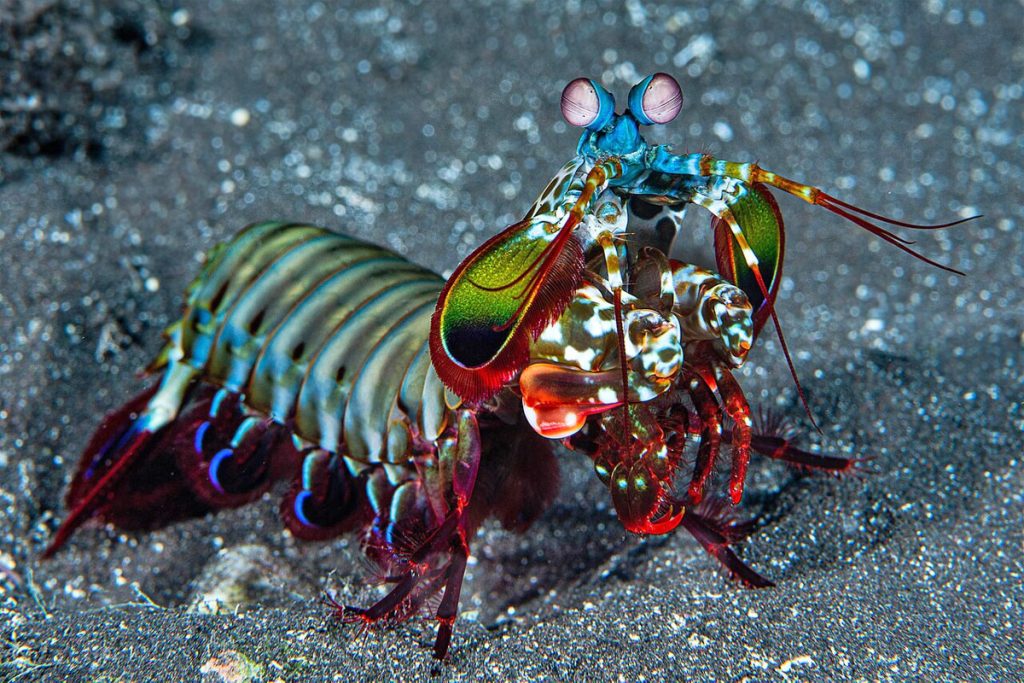
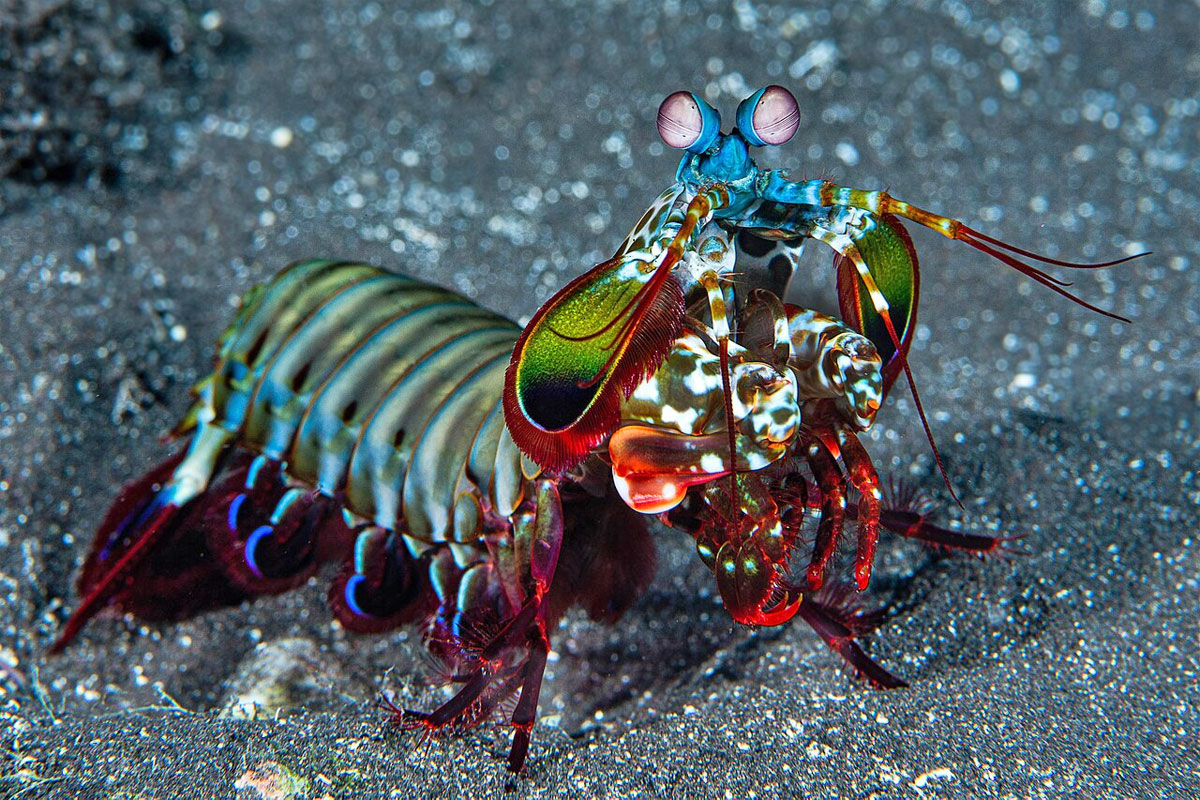
If there were a superhero in the marine world, the peacock mantis shrimp would undoubtedly be it. Despite its small size (typically 4 to 7 inches long), this brightly colored crustacean is one of the most formidable predators on the ocean floor.
Decked out in vibrant shades of neon blue, fiery red, and emerald green, it looks like a walking carnival. But don’t let its beautiful shell fool you; this animal is heavily armed and extremely dangerous.
Super-Powered Punches
The peacock mantis shrimp belongs to a category of stomatopods known as “smashers”. They possess club-like front appendages that they use to smash open the hard shells of crabs, clams, and snails. When this shrimp throws a punch, its clubs accelerate at the speed of a .22 caliber bullet. The strike is so incredibly fast that it boils the water around it, creating what are known as cavitation bubbles. When these vacuum bubbles collapse, they produce a secondary shockwave that can stun or kill prey even if the initial punch completely misses. In captivity, these feisty critters have even been known to shatter aquarium glass!
A Technicolor Visual Marvel
As if having bullet-fast fists wasn’t enough, the peacock mantis shrimp also possesses the most complex eyes in the animal kingdom. While humans have three types of color-receptive cones, this quirky ocean creature has over a dozen. They can see ultraviolet light, infrared light, and even circularly polarized light. Furthermore, each of their eyes can move independently and has trinocular vision, meaning a mantis shrimp can judge depth and distance perfectly using just one single eye.
2. The Master of Disguise: Leafy Seadragon
Scientific Name: Phycodurus eques
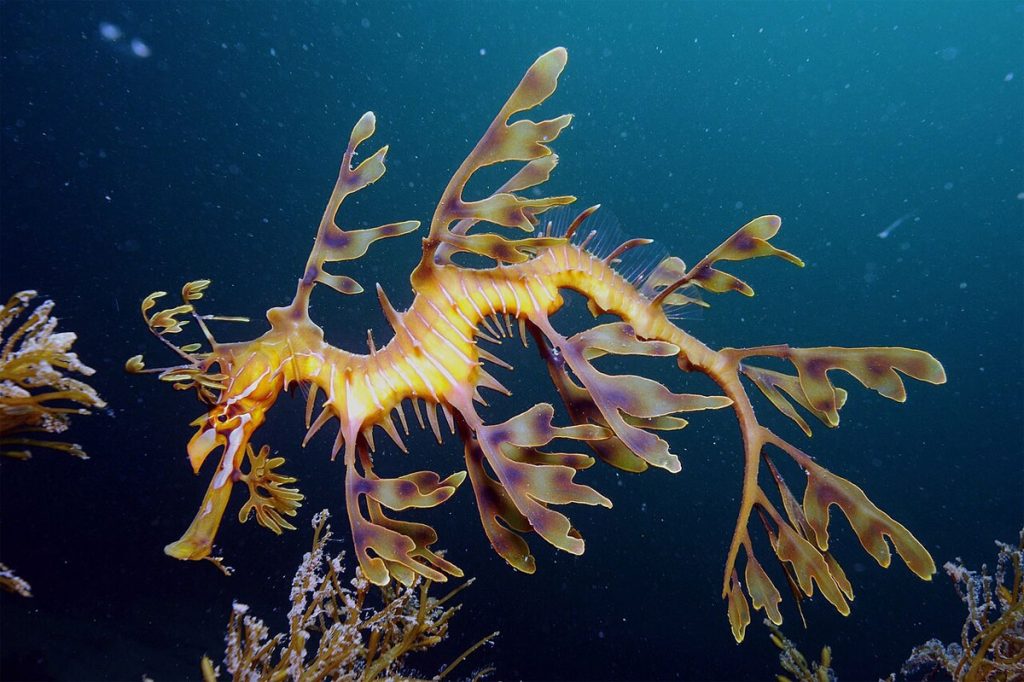
If you happen to go diving off the southern or western coasts of Australia, you might swim right past a leafy seadragon without ever realizing it. This enchanting marine fish is the undisputed master of camouflage in the animal kingdom.
The Floating Seaweed Illusion
Related to seahorses and pipefish, the leafy seadragon is covered from head to tail in delicate, leaf-like skin protrusions. Surprisingly, these leafy appendages are entirely useless for swimming; they serve solely as camouflage. To move through the water, the seadragon relies on tiny, almost completely transparent pectoral and dorsal fins. These invisible fins undulate rapidly, allowing the creature to glide sedately through the water, flawlessly completing the illusion of a piece of floating seaweed drifting in the ocean current.
Unconventional Parenting and Diet
Like their seahorse cousins, leafy seadragons have a quirky approach to reproduction: it is the males that experience pregnancy. The female deposits her eggs onto a specialized brood patch on the underside of the male’s tail. He carries and protects the eggs for several weeks until they hatch into perfectly formed, miniature “leafies”.
When it comes to feeding, the leafy seadragon is remarkably simple. It has no teeth and no stomach. Instead, it uses its long, pipe-like snout to generate a powerful suction, slurping up thousands of tiny crustaceans, mysid shrimp, and plankton every single day to meet its energy needs.
3. The Grumpy Neighbor: Sarcastic Fringehead
Scientific Name: Neoclinus blanchardi
The sarcastic fringehead might take the prize for the most amusingly named animal in the ocean. Native to the eastern Pacific Ocean, mostly off the coast of California and Baja California, this small, slender fish is famous for its fiercely territorial nature and outrageously aggressive behavior.
A Biting Sense of Humor
Where does the name come from? “Fringehead” refers to the floppy, fleshy appendages (cirri) located above the fish’s eyes. The word “sarcastic,” however, isn’t about the fish’s witty sense of irony. It stems from the Greek word sarkasmos, which means “to bite or tear flesh”. This perfectly describes the fish’s ferocious temperament. Sarcastic fringeheads are highly territorial and will aggressively defend their homes from anything that approaches, regardless of the intruder’s size. Since they prefer to live in narrow crevices, they will happily make their homes in empty shells, or even human trash like discarded bottles and tin cans.
Mouth-Wrestling Turf Wars
The quirkiest aspect of the sarcastic fringehead is how it handles disputes with rival males. When two fringeheads have a territory dispute, they engage in a bizarre, extreme version of mouth-wrestling. A male fringehead can open its mouth incredibly wide—up to four times its closed size. The inside of their enormous, gaping mouth is brightly colored, sometimes glowing with fluorescent green or yellow margins to look as intimidating as possible. The two males will press their massive, distended mouths against one another in a terrifying display of dominance until one eventually backs down. It is one of the most spectacular and bizarre stand-offs in marine biology!
4. The Misunderstood Deep-Dweller: Blobfish
Scientific Name: Psychrolutes marcidus
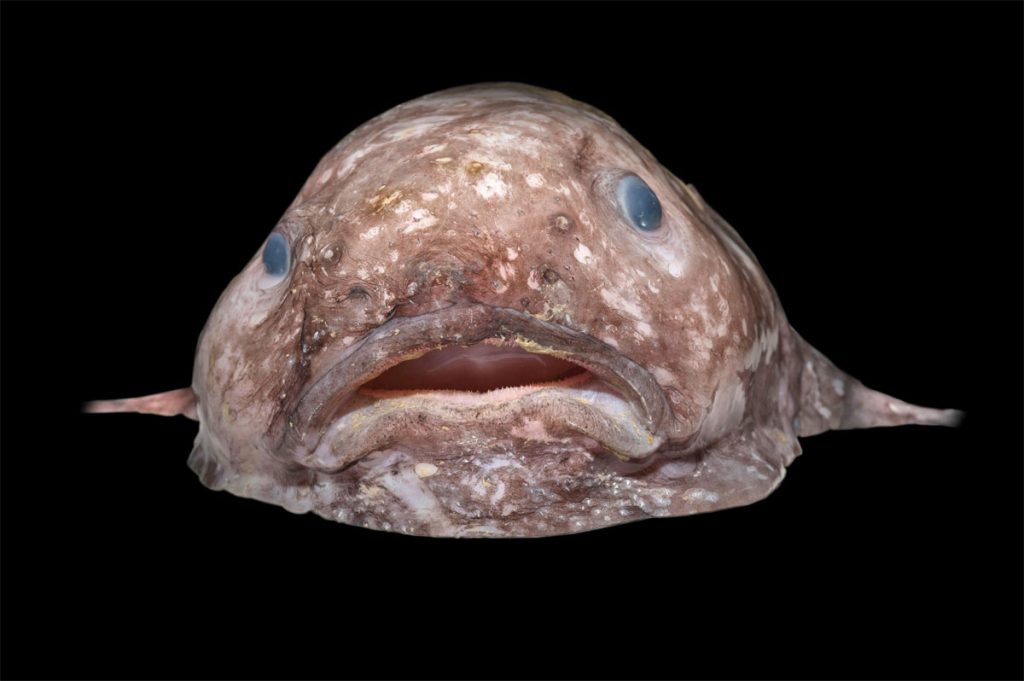
In 2013, the blobfish was famously voted the “World’s Ugliest Animal” in a viral internet poll. Known for its droopy, pale pink, gelatinous face, and miserable expression, the blobfish quickly became a global meme. But here is the truth that every marine biology enthusiast should know: the blobfish is actually the victim of a massive misunderstanding.
Built for Extreme Pressures
The blobfish makes its home in the deep sea off the coasts of Australia, Tasmania, and New Zealand, thriving at crushing depths of 2,000 to 3,900 feet. Down in this dark “twilight zone,” the water pressure is up to 120 times greater than it is at the surface.
If a normal fish were to swim down that deep, its swim bladder (the gas-filled organ that helps fish maintain buoyancy) would instantly implode. To survive, the blobfish evolved an incredible adaptation: it completely ditched the swim bladder and strong bones. Instead, its body is made of squishy, gelatinous tissue with a density slightly less than water, allowing it to effortlessly hover just above the seafloor without expending energy.
The “Ugly” Myth Explained
Because their bodies rely on the extreme deep-sea pressure to hold their physical shape together, pulling them up to the surface is disastrous. When a blobfish gets caught in a deep-sea trawling net and is rapidly dragged up to sea level, it suffers immense decompression damage. The sudden lack of water pressure causes its loose skin and soft tissue to expand and collapse into the droopy, shapeless puddle we recognize from the memes. Down in its natural habitat, the blobfish actually looks like a perfectly normal, standard fish!
5. The Gentle Scavenger: Vampire Squid
Scientific Name: Vampyroteuthis infernalis
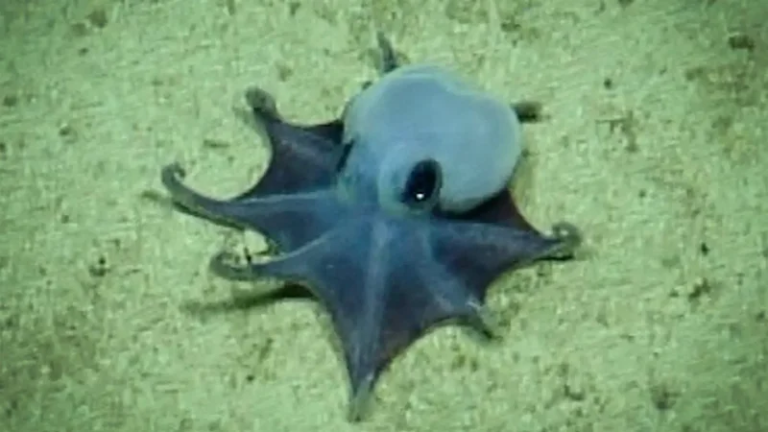
With a scientific name that literally translates to “vampire squid from hell,” you would expect this animal to be a blood-sucking terror of the deep. In reality, this quirky ocean wildlife species is neither a true squid, nor an octopus, nor a blood-drinker. Vampyroteuthis infernalis is actually the only surviving member of an ancient, separate family of cephalopods, often referred to as a “living fossil”.
A Peaceful Life in the Abyss
The vampire squid lives in the oxygen minimum zone—a deep layer of the ocean where oxygen levels are so incredibly low that very few predators can survive there. To conserve energy in this harsh environment, the vampire squid lives a highly passive, slow-paced lifestyle. It has the lowest metabolic rate of any known cephalopod.
Its scary name comes from its dark red body, massive pale blue eyes (which are the largest in the animal kingdom relative to body size), and the webbing of skin that connects its eight arms, resembling a dark, sweeping cape.
Eating “Marine Snow”
While other cephalopods hunt live prey, the vampire squid is a gentle detritivore (scavenger). It feeds on what marine biologists affectionately call “marine snow”. This “snow” consists of animal corpses, tiny crustacean remains, discarded mucus, and fecal pellets drifting down from the surface. The vampire squid unfurls two specialized, sticky, thread-like filaments to catch these tiny debris particles, rolling them into a mucus ball and eating them.
Furthermore, if a predator does somehow threaten it, the vampire squid doesn’t spray black ink like a typical squid. In the pitch-black deep sea, black ink wouldn’t do anything! Instead, it ejects a dazzling, glowing cloud of bioluminescent mucus to confuse the predator, allowing the “vampire” to quietly slip away into the shadows.
Conclusion: Celebrating and Protecting Our Ocean’s Oddities
The sheer variety of quirky ocean wildlife proves that evolution holds the ultimate license to be creative. From the rainbow-colored, super-punching Peacock Mantis Shrimp to the peaceful, deep-dwelling Vampire Squid, these bizarre sea creatures challenge our understanding of what life on Earth can look like.
However, many of these fascinating species are vulnerable to human activity. Deep-sea trawling threatens the delicate blobfish and vampire squid habitats, while coastal pollution and the illegal pet trade endanger the beautiful leafy seadragon. Exploring marine biology and spreading the word about these wonderfully weird creatures is the first step toward ocean conservation.
Next time you visit the beach or watch a documentary, remember that beneath the waves lies a vast world full of quirky, bizarre, and beautiful creatures just waiting to be understood! Which of these quirky sea animals is your favorite?