The Ultimate Guide to Consuming Less Air While Scuba Diving
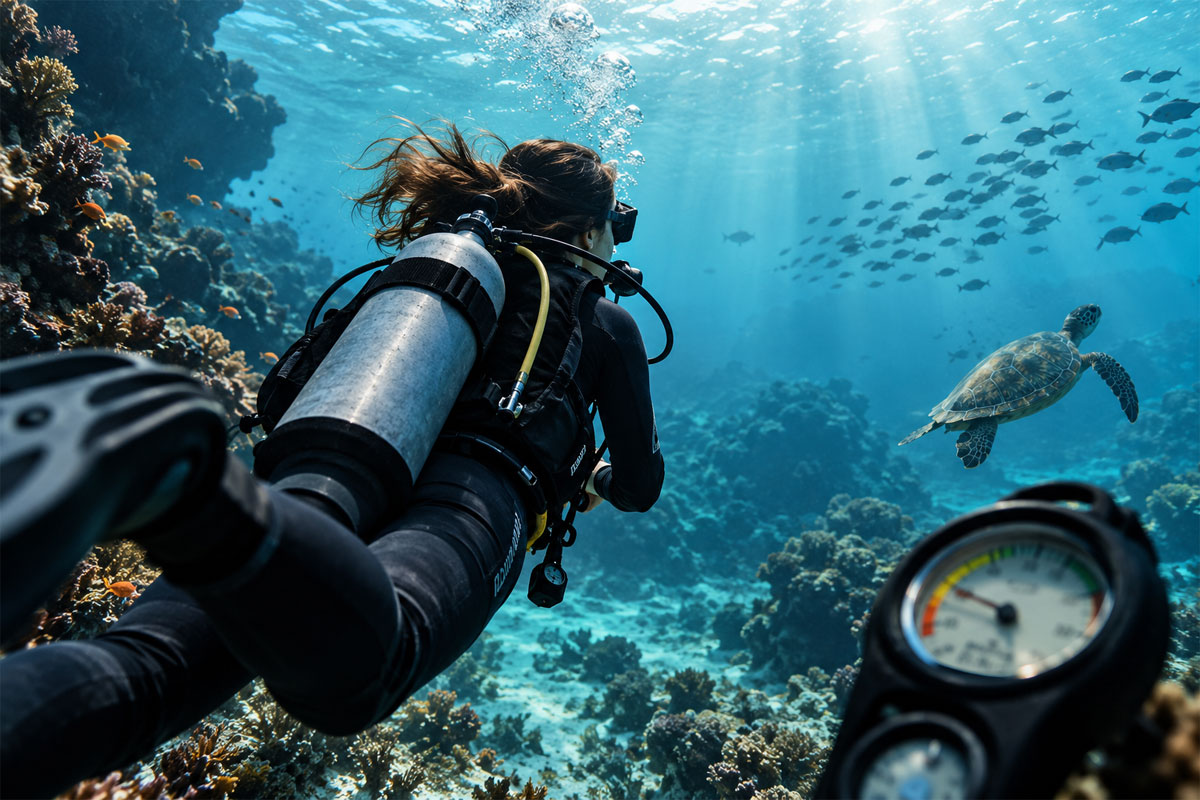
We’ve all been there. You’re gliding over a vibrant coral reef, absolutely mesmerized by a passing sea turtle, when the divemaster gives the dreaded hand signal: “How much air do you have?” You check your Submersible Pressure Gauge (SPG), and your heart sinks. You’re at 70 bar (1000 psi), while everyone else is comfortably hovering at 120 bar. You are the reason the dive is ending early.
If you’re tired of feeling like the group’s “air hog,” take a deep breath and relax. Improving your scuba diving air consumption is the holy grail for beginners and intermediate divers alike, and the good news is that you don’t need a pair of hidden gills to make your tank last longer.
With a few strategic tweaks to your technique, gear, and mindset, you can significantly extend your bottom time. Here is your comprehensive guide to breathing less, diving longer, and enjoying every second underwater.
Why Do I Run Out of Air So Fast? (The Quick Science)
Before we fix the problem, it helps to understand why your tank drains so quickly. Your air consumption is dictated by three primary factors:
- Depth: Thanks to Boyle’s Law, the deeper you go, the denser the air you breathe. At just 10 meters (33 feet), you consume air twice as fast as you would resting at the surface. At 30 meters (100 feet), that rate quadruples!
- Workload: Any unnecessary physical exertion—whether it’s fighting a current, kicking inefficiently, or struggling with your buoyancy—forces your muscles to demand more oxygen.
- Stress and Cold: Anxiety triggers rapid, shallow breathing. Similarly, being cold forces your body to burn energy rapidly to maintain your core temperature.
Now that we know the culprits, let’s look at how to combat them.
10 Practical Tips to Improve Your Scuba Diving Air Consumption
1. Perfect Your Buoyancy and Ditch the Extra Lead
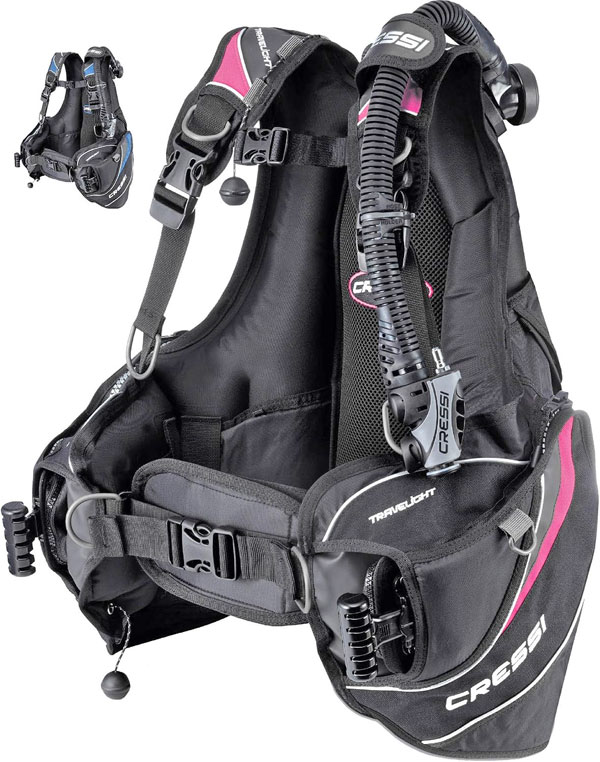
Overweighting is the number one cause of poor air consumption. When you wear too much lead, you are forced to pump excess air into your BCD to compensate. This turns you into a massive, drag-inducing balloon. You end up swimming at an awkward upward angle, kicking furiously just to stay afloat. Take the time to do a proper weight check at the surface and aim for neutral buoyancy—you’ll be amazed at how much less effort it takes to move.
2. Flatten Out: Master Your Trim
Swimming upright is like pushing a billboard through the water. Water is roughly 800 times denser than air, so minimizing your profile is crucial. Adjust your tank height and the distribution of your weights until you can effortlessly hover in a perfectly horizontal position. Moving efficiently through the water minimizes drag, meaning less muscle fatigue and much less air consumed.
3. Breathe Like a Sleeping Sloth
If there is a golden rule for scuba breathing, it is this: slow, deep, and from the belly. When divers get anxious, they tend to take short, shallow chest breaths. This leaves “dead air” in the lungs and fails to properly flush out carbon dioxide, which ironically triggers the urge to breathe faster.
- The Technique: Inhale deeply into your diaphragm (your belly should expand), pause naturally for a micro-second (never hold your breath!), and exhale fully and slowly.
- The Goal: Aim for about six to eight full, relaxed breaths per minute. Picture a sloth on vacation—that is the exact level of zen you want to achieve.
4. Adopt the Frog Kick
The traditional “bicycle kick” or flutter kick is great for snorkeling but highly inefficient for scuba diving. It directs thrust upwards and downwards rather than straight back. Learning the “frog kick” allows you to utilize powerful leg muscles to push water directly behind you, followed by a glorious glide phase. Gliding requires zero energy, which translates directly to saved air.
5. Stop Skulling (Put Your Hands Away)
Instructors harp on this from day one: stop using your hands to swim! “Skulling” or waving your arms about does almost nothing for your forward propulsion, but it absolutely drains your energy. Every time you move an arm, your muscles require oxygen. Fold your arms, hold your hands together in front of you, or tuck them into your harness. Let your legs do the work.
6. Streamline Your Scuba Gear
Dangling gear is a scuba diver’s worst enemy. An SPG or octopus trailing beneath you not only damages fragile coral reefs, but it acts as an underwater parachute, creating immense drag. Tuck your hoses closely to your body, clip off your gauges, and store accessories like torches and slates in pockets designed to minimize bulk.
7. Stay Warm to Slow Your Metabolism
A shivering diver is a heavy-breathing diver. As soon as you start to feel cold, your body works overtime to generate heat, creating a fast, steady drain on your air supply. Don’t try to “tough it out” in a rash guard if the water is chilly. Wear a well-fitting wetsuit, add a neoprene hood (you lose a lot of heat through your head!), and prioritize thermal comfort to keep your breathing rhythm slow and steady.
8. Fix the Sneaky Leaks
Sometimes, the air loss isn’t your fault—it’s your gear’s. A deteriorating O-ring in your tank valve, a slightly free-flowing octopus, or a leaky inflator hose can silently steal precious bars of air over a 45-minute dive. Regularly maintain your gear and always perform a buddy check to spot tiny bubble streams before you descend.
9. Stay Dive-Fit and Hydrated
You don’t need to be an Olympic athlete to scuba dive, but cardiovascular fitness directly supports efficient breathing. Yoga is fantastic for divers, as it teaches breath control and diaphragm awareness. Furthermore, dehydration thickens your blood and increases your heart rate. Drink plenty of water before and after your dives to keep your respiratory system operating at peak efficiency.
10. Dive More, Stress Less
Experience is the greatest teacher. New divers naturally consume more air simply because their brains are processing a hundred new sensations at once. The more you dive, the more comfortable you become in the underwater environment. As your brain realizes you are safe and your movements become second nature, your air consumption will naturally drop.
Pro Tip: Track Your Progress with your SAC Rate
If you want to know if you are truly improving, you need to calculate your Surface Air Consumption (SAC) rate. This metric normalizes your air usage to surface pressure, allowing you to compare a shallow 10-meter dive to a deep 30-meter wreck dive.
For context, trained and experienced divers typically use between 15 to 20 liters of breathing gas per minute on average. If you are a beginner, it is entirely normal to sit well above 20L/min. Many modern dive computers will calculate your SAC rate automatically if paired with an air-integrated transmitter, making it easier than ever to watch your efficiency improve dive after dive!
Frequently Asked Questions
Why do I run out of air so fast scuba diving?
Rapid air consumption is usually caused by carrying too much weight, poor buoyancy control, swimming aggressively, or feeling stressed/cold. Additionally, swimming at deeper depths naturally causes you to consume air much faster due to the increased pressure compressing the breathing gas.
How many breaths per minute should a scuba diver take?
For optimal air consumption, a relaxed scuba diver should aim to take about 6 to 8 slow, deep breaths per minute. This involves inhaling deeply from the diaphragm, pausing naturally, and exhaling fully and slowly.
Does holding my breath save air while scuba diving?
No! You should never hold your breath while scuba diving due to the severe risk of lung over-expansion injuries. Attempting to skip breaths also leads to a buildup of carbon dioxide in your bloodstream, which will trigger an uncontrollable urge to pant, ultimately causing you to burn through your air faster.
Will a bigger tank help my air consumption?
While upgrading from a standard 11-liter (AL80) cylinder to a 15-liter (HP100 or HP120) steel tank will give you a larger supply of gas to draw from, it does not fix the root cause of poor air consumption. In fact, heavier tanks can sometimes affect your trim and buoyancy. It is always better to master your breathing and movement skills first.
Happy diving, and may your bottom times be long and your gauges ever full!