Scuba Diving in the Tuamotu Atolls of French Polynesia
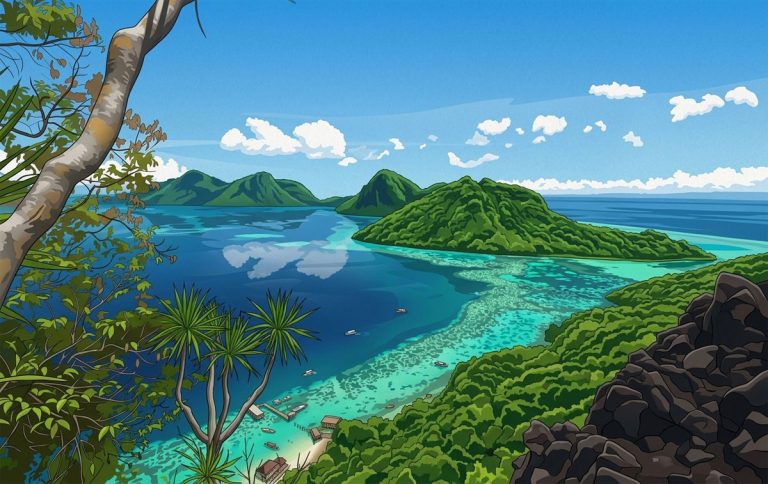
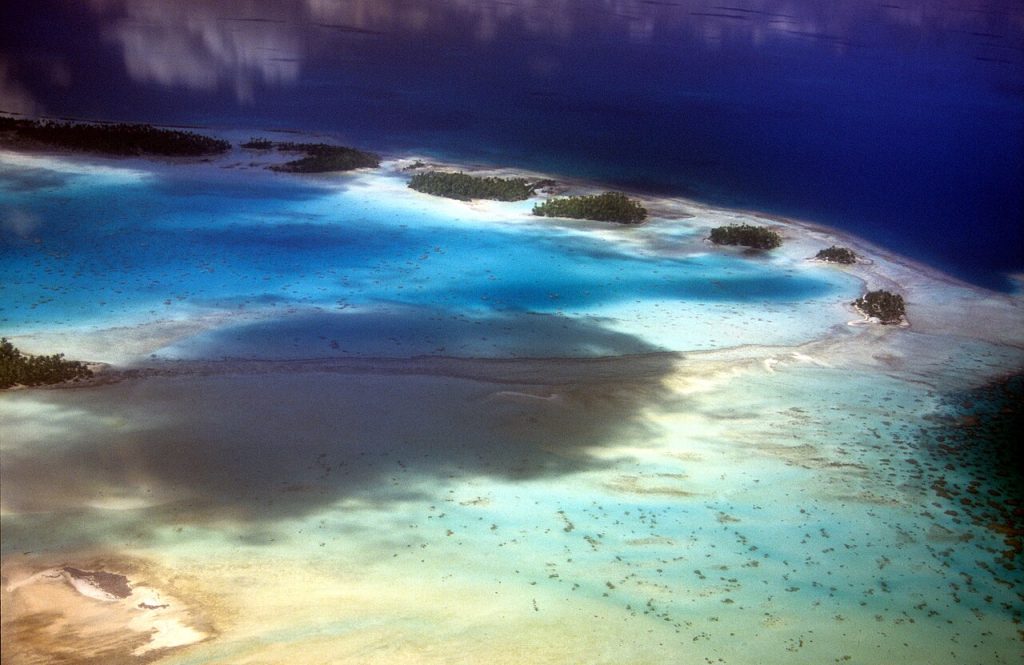
Scattered like a necklace of precious pearls across the vast, deep expanse of the South Pacific Ocean, the Tuamotu Archipelago in French Polynesia is a dreamscape that borders on the mythical. Comprising 78 coral atolls – making it the largest continuous chain of atolls in the world – this remote and sun-drenched slice of paradise offers what is widely considered the most exhilarating, pristine, and shark-dense scuba diving on the planet. From the air, as you fly in from the main island of Tahiti, the atolls look like glowing emerald and white halos floating on an endless canvas of deep indigo blue. But it is beneath the water’s surface where the true magic of the Tuamotus unfolds.
For decades, these waters have served as a holy grail for ocean enthusiasts, underwater photographers, and thrill-seeking scuba divers. Here, the diving is rarely a gentle flutter over manicured coral gardens; rather, it is an adrenaline-fueled immersion into a raw, untamed ocean wilderness. Imagine gliding at thrilling speeds through narrow underwater canyons while hundreds of grey reef sharks patrol the blue, or coming face-to-face with wild bottlenose dolphins that actively seek out divers for belly rubs and playful interactions. With crystal-clear waters offering visibility that frequently exceeds 50 meters, thriving coral ecosystems, and an overwhelming abundance of apex predators, the Tuamotus stand as a powerful testament to what the ocean once looked like before human interference.
This extensive guide will take you on a deep dive into the crown jewels of the Tuamotu Atolls -Fakarava, Rangiroa, and Tikehau—exploring the unique geological phenomena that make this region so special, the breathtaking marine life you can expect to encounter, and the essential logistical details needed to plan the expedition of a lifetime.
The Hydrology of High-Adrenaline “Pass Diving”
To truly understand and appreciate scuba diving in the Tuamotus, one must first grasp the concept of “pass diving”. An atoll is essentially a ring-shaped coral reef or series of islets (called motus) that encircle a central lagoon. Over millions of years, as ancient volcanoes sank back into the sea, fringing coral reefs grew upwards toward the sunlight, eventually leaving only the circular reef and the protected, shallow inner lagoon.
Because these massive lagoons are subject to the gravitational pull of the moon, vast quantities of water must move in and out of the atoll with the changing daily tides. The only way for this immense volume of water to transit is through the “passes”—narrow, natural channels or breaks in the coral reef that connect the sheltered lagoon to the turbulent open ocean. This hydrological funnel creates incredibly strong currents, sometimes exceeding speeds of eight knots, effectively turning the passes into rushing underwater highways.
Virtually all scuba diving in the Tuamotus is strictly dictated by these tidal movements. Divers aim to dive during the incoming (flood) tide. During this time, pristine, nutrient-rich, and crystal-clear oceanic water is flushed violently into the lagoon. This influx of pelagic water brings with it incredible visibility and an explosion of the marine food chain. Plankton and small schooling fish are swept into the pass, which in turn attracts immense aggregations of larger predators—most notably, massive walls of sharks, giant groupers, tuna, and barracudas.
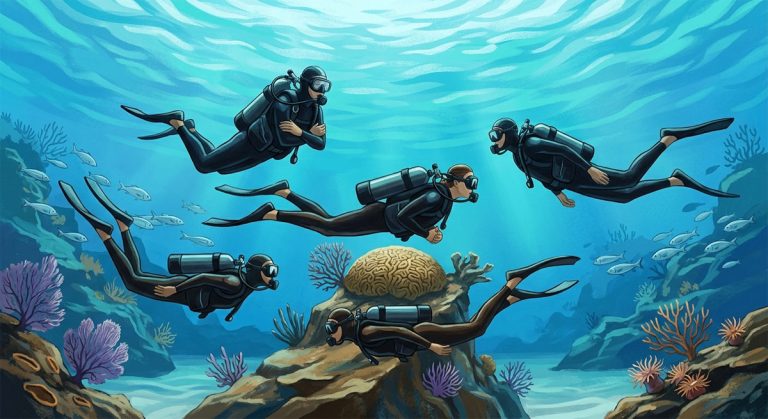
Entering the water in the deep blue ocean just outside the pass, divers descend and let the surging current catch them. What follows is a high-speed, relatively effortless “drift dive” where divers fly over the reef side-by-side with sharks and eagle rays, eventually being safely deposited in the calm, shallow waters of the inner lagoon. Conversely, the outgoing (ebb) tide pulls murky lagoon water back into the ocean, creating fierce down-currents and standing surface waves that can be highly dangerous for boats and divers alike; thus, drift dives are almost exclusively done on the flood tide.
Fakarava: The UNESCO Biosphere Masterpiece
Fakarava is the second-largest atoll in French Polynesia, and its unparalleled ecological significance earned it the designation of a UNESCO Biosphere Reserve in 2006. The reserve actually encompasses Fakarava and six neighboring atolls (including Taiaro, Toau, and Niau), functioning as an untouched sanctuary for rare and endemic species of flora and fauna. The local population of roughly 800 inhabitants, primarily pearl and copra (coconut) farmers, work harmoniously with conservationists to protect this delicate habitat, understanding that their livelihood relies heavily on a sustainable ecosystem.
For scuba divers, Fakarava is pure heaven, divided primarily into two distinct diving zones: Garuae Pass in the north and Tumakohua Pass in the south.
Garuae Pass (The North Pass)
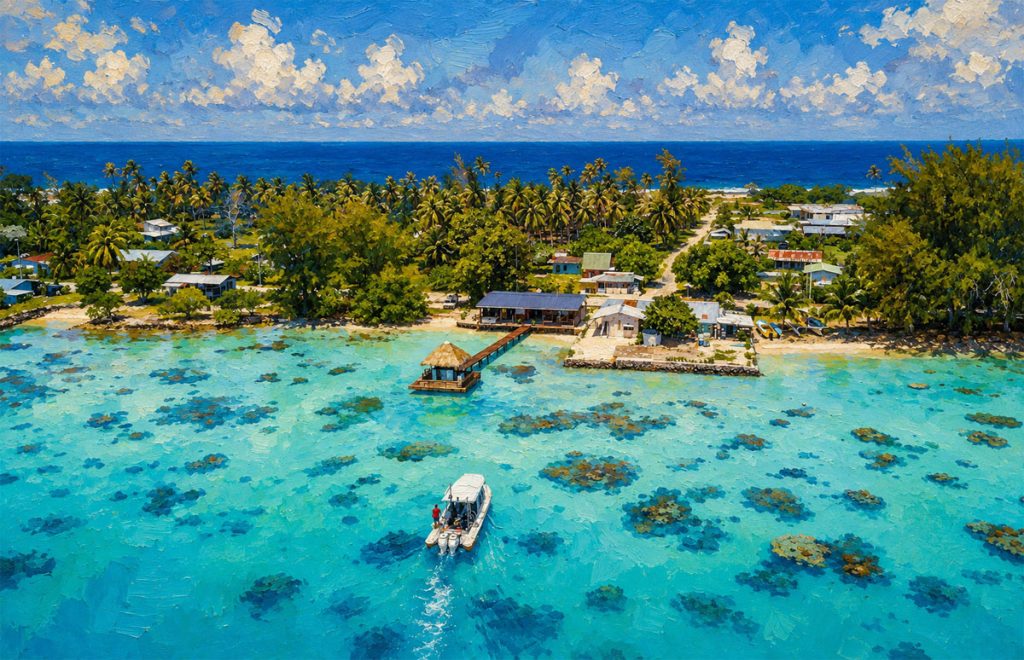
Measuring an astonishing 1.6 kilometers (about 1 mile) across, Garuae is the widest navigable pass in French Polynesia. The sheer scale of this pass means that dives here are grand, sweeping experiences. During a flood tide, divers are swept over vast fields of vibrant hard corals. The undeniable highlight of the North Pass is the “Ali Baba Canyon,” a massive depression in the reef where the current creates a natural shelter. Inside this canyon, divers find thousands of schooling fish, including paddletail snappers, goatfish, and bigeye trevallies, seeking refuge from the current. The sheer biomass is staggering. Patrolling the perimeters of the canyon are the ever-present grey reef sharks, whitetip reef sharks, and, during the cooler months, great hammerheads.
Tumakohua Pass (The South Pass) and the Wall of Sharks
If the North Pass is characterized by its grand scale, the South Pass is defined by its sheer density of predators. Located near the historic, mostly abandoned village of Tetamanu—home to the first Catholic church built in the Tuamotus out of fossilized coral in 1874—Tumakohua Pass is much narrower and shallower. The conditions here are noticeably milder, making it accessible to a wider range of diver certification levels.
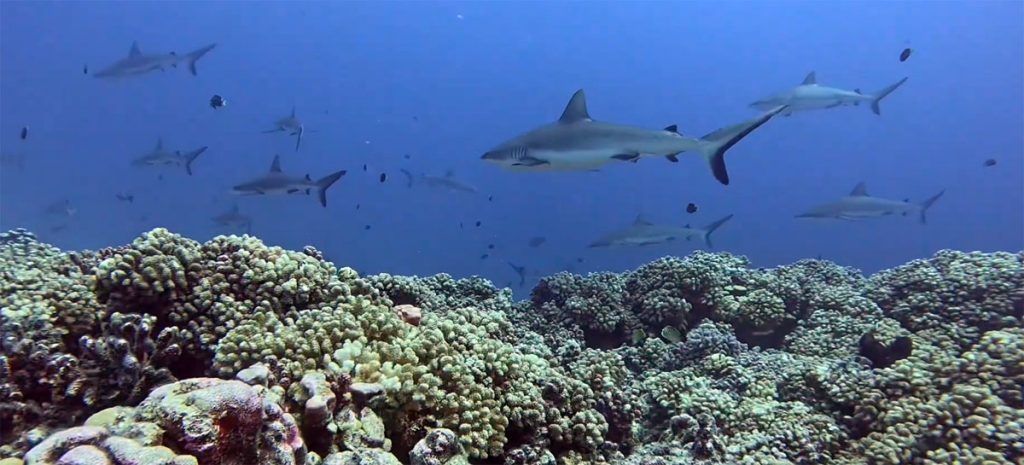
The main attraction here is nothing short of legendary: the “Wall of Sharks”. As divers drop into the incoming current and drift through the pass, they reach a narrow underwater valley known as Shark’s Hole. Hovering effortlessly in the flow are hundreds—frequently numbering between 500 and 700—grey reef sharks. They stack upon each other in a liquid choreography, creating a literal, living, breathing wall of cartilage and muscle. This aggregation is one of the largest concentrations of sharks in the world, yet the atmosphere is remarkably peaceful. The sharks are not feeding; they are resting, allowing the oxygen-rich current to flow over their gills.
In June and July, Tumakohua Pass plays host to a massive spawning aggregation of thousands of camouflage groupers. This phenomenon abruptly ends the peaceful shark aggregation, turning the pass into a chaotic, thrilling feeding frenzy, particularly under the cover of a night dive. Excellent local operators like Enata Fakarava Diving or TOPDIVE guide divers safely through these life-altering underwater spectacles.
Rangiroa: The Endless Lagoon and the Dolphin Whisperers
Situated to the northwest of Fakarava lies Rangiroa, the largest atoll in the Tuamotus and the second-largest in the entire world. The lagoon of Rangiroa is so vast that the entire island of Tahiti could fit comfortably inside it. The name “Rangiroa” translates to “Endless Sky,” a fitting moniker for a place where the horizon stretches infinitely in every direction. Rangiroa is synonymous with pelagic, big-animal encounters.
Tiputa Pass: High-Speed Drifts and Bottlenose Dolphins
Diving Rangiroa’s crown jewel, Tiputa Pass, is akin to strapping yourself into an underwater roller coaster. The currents here are notoriously rapid—frequently flowing between 4 and 8 knots—providing a massive adrenaline rush.
But what sets Tiputa Pass apart from almost any other dive site on Earth is its resident pod of wild bottlenose dolphins. Unlike dolphins in most parts of the world that might briefly swim past divers, the dolphins of Rangiroa actively seek human interaction. They are known to joyfully ride the bow waves of the dive boats at the surface, and once divers descend into the blue, they frequently approach. They swim playfully among the divers, demanding belly rubs, performing pirouettes, and looking divers squarely in the eye. This deep, emotional connection with highly intelligent, wild cetaceans leaves many divers profoundly moved.
Beyond the dolphins, Tiputa is a Mecca for sharks. Divers routinely encounter massive schools of grey reef sharks, sleek silvertip sharks, and the occasional tiger shark. From January to March, the pass becomes a hotspot for elusive great hammerhead sharks, which ascend from the deep to hunt eagle rays. The reef itself features dramatic topography, including “The Cave” (a deep overhang at around 35 meters where sharks congregate) and “The Shoal.”
Avatoru Pass
Just a few miles away is Rangiroa’s second channel, Avatoru Pass. While slightly less famous than Tiputa, Avatoru is equally magnificent. It is renowned for its reliable encounters with large silvertip sharks and massive, car-sized Napoleon wrasse. Dive centers like Rangiroa Plongée—known for their small, personalized dive groups and eco-conscious approach—offer daily excursions to both passes.
A short 55-minute flight from Tahiti, or a quick island-hop from Rangiroa, brings you to Tikehau, a smaller, circular atoll famous for its beautiful pink sand beaches and laid-back, authentic Polynesian atmosphere. In the 1980s, legendary marine explorer Jacques-Yves Cousteau conducted an expedition to the Tuamotus and famously declared that Tikehau contained the highest concentration of fish of any lagoon in French Polynesia. Decades later, as you slip beneath the surface, it becomes immediately apparent that this statement still holds true.
Tuheiava Pass
Tikehau has only one pass connecting its emerald lagoon to the ocean: Tuheiava Pass. Because all the tidal water exchange is concentrated through this single opening, the marine life here is exceptionally dense. Drift diving through Tuheiava Pass rewards divers with an astonishing array of biodiversity. You will drift past tornadoes of barracudas, massive schools of bigeye trevallies, dogtooth tuna, and an array of sharks including blacktips, whitetips, silvertips, and—from January to June—tiger sharks and great hammerheads.
The Manta Ray Ballet
However, Tikehau’s most magical and unique attraction is its resident population of reef manta rays. While mantas can occasionally be seen cruising the passes of Rangiroa and Fakarava, Tikehau offers a much more reliable and peaceful encounter within the calm waters of the lagoon itself. Near the site of an old, abandoned pearl farm, divers can descend to a shallow sandy bottom (around 50 feet / 15 meters) adorned with coral bommies.
These coral heads serve as natural “cleaning stations.” The massive manta rays, with wingspans of up to 4 meters, gracefully hover over the coral while tiny cleaner wrasses pick parasites off their bodies and inside their gills. This symbiotic behavior allows divers to sit quietly on the sandy bottom and watch the majestic “manta ballet” unfold just inches above their heads. Reputable operators such as Tikehau Diving and Raie Manta Club ensure that these encounters are conducted respectfully, preserving the sanctity of the cleaning station.
Beyond the Big Three: Makatea, Toau, and Manihi
While Fakarava, Rangiroa, and Tikehau form the “golden triangle” of Tuamotu diving, the expansive archipelago hides several other lesser-known gems.
- Makatea: Unlike the flat coral rings of its neighbors, Makatea is a highly unusual “raised coral atoll”. Tectonic uplift pushed the ancient reef high above the ocean surface, creating towering limestone cliffs up to 80 meters high. Because it lacks a classic shallow lagoon, diving at Makatea is dramatically different. It offers deep drop-offs, massive underwater cavern systems, and crystal-clear visibility along dramatic walls that plunge into the abyss.
- Toau: The pristine, almost completely uninhabited atoll of Toau is often visited by liveaboards operating out of Fakarava. It features a false pass that acts as a natural fish trap, offering incredible stationary dives teeming with nurse sharks, massive moray eels, and grey reefs.
- Manihi: Located further to the northeast, Manihi is known primarily as the birthplace of the Tahitian black pearl industry. It offers beautiful, off-the-beaten-path pass diving with virtually no other dive boats in sight, making it perfect for divers looking for ultimate isolation.
Conservation and Local Culture
The magic of the Tuamotus is not just the wildlife, but the people who fiercely protect it. In places like Fakarava and Tikehau, local Polynesians have lived in harmony with the sea for generations. Fishing is done sustainably, mostly to feed the islanders, using traditional traps built from fossilized coral (feo) or underwater fencing.
Furthermore, the deep respect the locals have for sharks means that shark finning is virtually nonexistent here. In Polynesian culture, many families consider the shark to be an aumakua, an ancestral guardian spirit. To cement this cultural protection into law, French Polynesia established the world’s largest shark sanctuary in 2006, protecting all species of sharks across its 4 million square kilometers of ocean space. This legal protection is why you can still drop into a Tuamotu pass and see hundreds of sharks thriving.
Practical Guide for Divers: Logistics, Seasons, and Conditions
Skill Level and Certifications
Because diving in the Tuamotu Atolls centers around passes with strong, unpredictable currents, it is generally considered an advanced diving destination. While beginners or Open Water divers can do shallow lagoon dives, reef exploration, or the milder South Pass of Fakarava, to truly experience the best of the Tuamotus, divers should hold an Advanced Open Water certification (or CMAS Level 2). Confidence in drift diving, rapid descents (negative entries), and excellent buoyancy control are required. Nitrox certification is also highly recommended to safely extend your bottom times at depth.
Best Time to Go
The Tuamotus offer exceptional year-round diving due to the warm tropical climate and consistent water temperatures ranging from 26°C to 29°C (79°F to 84°F). A 3mm wetsuit is generally sufficient. However, pelagic sightings are highly seasonal:
- Great Hammerhead Sharks and Eagle Rays: The best time to spot them hunting in the passes is from January to March.
- Manta Rays (Tikehau): While seen year-round, the peak season for cleaning stations is from May to October.
- Grouper Spawning (Fakarava): June and July. This event triggers an influx of hundreds of hunting sharks.
- Humpback Whales: August to October. While predominantly seen in the Society Islands (like Moorea and Tahiti), they are occasionally spotted migrating past the deep drop-offs of the Tuamotus.
Liveaboard vs. Land-Based Diving
Travelers have two main options to explore the Tuamotus. Land-based diving is highly popular, with divers staying in luxury overwater bungalows, charming local pensions (family-run guesthouses), or eco-lodges. For land-based divers planning to visit multiple atolls, purchasing an eDivingPass or a Te Moana pass is a brilliant logistical hack. These multi-island dive passes are accepted by a vast network of dive centers (such as TOPDIVE and Enata Fakarava Diving) across Bora Bora, Tahiti, Rangiroa, and Fakarava, offering significant discounts and ease of booking.
Alternatively, booking a French Polynesia liveaboard adventure, such as on a luxury sailing catamaran (like the Eleuthera 60), allows divers to seamlessly hop between Fakarava, Toau, and Rangiroa. A liveaboard grants you access to remote dive sites at the crack of dawn, long before the day-boats arrive from the mainland.